A16 Realiser
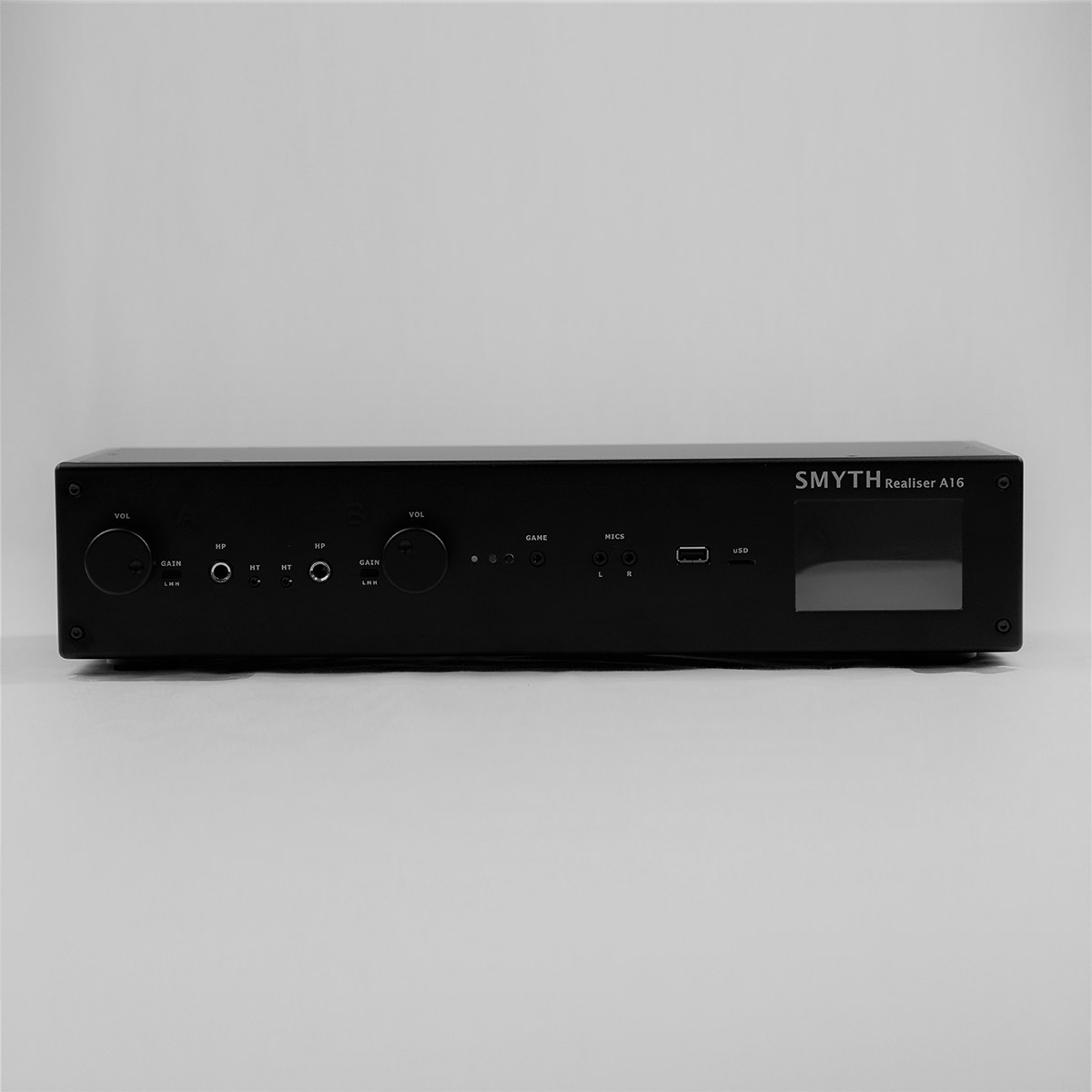
The A16 Realiser is a sound processor dedicated to binaural virtualisation of loudspeaker systems. It can render up to 16 virtual loudspeakers in any position and decode Dolby Atmos, DTS:X and Auro-3D. Built around Smyth's own SVS virtualisation technology, it relies on personalised binaural room impulse responses, essentially a precise acoustic fingerprint of both an individual listener's ears and the room the speakers are set up in, captured directly from real loudspeakers before being reproduced over headphones. The A16 is also able to control two headphone outputs with independent head-tracking and handle personalised room impulse responses, along with many other capabilities, and accepts audio via USB, HDMI, Dante or balanced line inputs, with users able to share or exchange their personal room measurements through Smyth's own Realiser Exchange platform.
tech specs
history
+–
The Realiser comes from Smyth Research, a company founded in 2004 in Bangor, Northern Ireland, by Stephen Smyth, a digital audio signal processing specialist who had already taken one invention from lab to commercial success once before, founding Audio Processing Technology Ltd in 1988 to market the apt-X audio coding algorithm developed during his postgraduate research. The original Realiser, limited to eight channels of surround modelling, HDMI-only connectivity and a 48kHz sample rate, established the core idea of personalised, headphone-based room virtualisation, before Stephen's brother Mike Smyth led the development of a considerably more capable successor. In August 2016, Smyth Research turned to Kickstarter to fund production of that next generation, the A16, extending channel capacity, adding modern digital interfaces and building in decoders for Dolby Atmos, DTS:X and Auro-3D; the first units began shipping to backers towards the end of 2019.
 back to tools